
The first few years of life are some of the most important for a person’s long-term growth. During this period, a child’s brain develops at a pace unmatched at any other stage, building the foundation for learning, behavior, and emotional health. Researchers have found that early experiences, relationships, and environments actively shape how the brain forms its connections. Supportive interactions, rich language exposure, play, and a sense of safety all help strengthen the brain’s architecture, while chronic stress can disrupt it. Understanding the science of child development helps parents, caregivers, and educators make informed choices that support healthy growth. The good news is that many of the most powerful influences are simple, everyday moments that any caring adult can provide.
How Does the Brain Grow in the Early Years?
At birth, a baby’s brain contains billions of neurons, but many of the connections between them have not yet formed. In the first few years, the brain builds these connections at an astonishing rate, with researchers estimating that more than a million new neural connections form every second during early childhood. By around age five, the brain reaches roughly 90 percent of its adult size. These connections create pathways that support everything from movement and language to memory and emotional regulation. Simpler circuits, such as those for vision and hearing, develop first, while more complex skills build on top of them. Much like constructing a house, a strong foundation early on makes it easier to add more advanced abilities later in life.
Why Connections Are Strengthened or Pruned
As the brain produces an abundance of connections, it also begins to refine them through a process called synaptic pruning. Connections that are used frequently grow stronger and more efficient, while those that go unused gradually fade away. Scientists often describe this as a “use it or lose it” principle. When a child hears language regularly, for example, the neural pathways that process speech become stronger. When a toddler practices stacking blocks, the circuits that support coordination and problem solving are reinforced. This process allows the brain to become more efficient and specialized over time. It also explains why repeated, meaningful experiences during early childhood carry so much weight in shaping lifelong abilities.
The Power of Serve-and-Return Interactions
One of the most important drivers of healthy brain development is a back-and-forth exchange that researchers call serve and return. It happens when a baby coos, points, or babbles, and an adult responds with eye contact, words, or a smile. These simple interactions work much like a game of tennis, with each response encouraging the child to continue communicating. Over time, these exchanges help build the neural connections that support language, social skills, and emotional understanding. They also teach children that their actions matter and that the adults around them are reliable. Everyday moments like naming objects during a walk, responding to a toddler’s questions, or singing together all provide valuable opportunities for serve-and-return interaction.
Language Exposure Shapes Learning
Language development begins long before a child speaks their first word. Babies start processing the sounds, rhythms, and patterns of speech from the earliest months of life. The more meaningful conversation they are exposed to, the more their language pathways develop. Talking, reading aloud, and singing all contribute to a growing vocabulary and a stronger understanding of how language works. Research has shown that direct, engaged conversation is especially powerful, since children benefit most when adults talk with them rather than simply around them. Background noise from televisions or devices does not provide the same benefits. Early language skills are closely linked to later reading ability and school readiness, which makes daily conversation one of the most valuable investments a caregiver can make.
How Stress Affects the Developing Brain
Not all stress is harmful. Brief, manageable challenges, such as meeting new people or getting a routine vaccination, can help children learn to cope when supportive adults are present. However, when stress is intense, frequent, or prolonged without adequate support, it can have lasting effects. Researchers refer to this as toxic stress. Situations like ongoing neglect, exposure to violence, or severe family hardship can keep the body’s stress response activated for long periods, which may interfere with healthy brain development. Fortunately, responsive and caring relationships act as a powerful buffer. When children have at least one stable, supportive adult in their lives, they are far better equipped to manage stress and build resilience.
Why Play Is So Important
Play may look like simple fun, but it is one of the most effective ways young children learn. Through play, children practice problem solving, experiment with cause and effect, and develop creativity. Building with blocks introduces early math and engineering concepts, while pretend play strengthens language, imagination, and social understanding. Physical play, like running, climbing, and dancing, supports motor skills and coordination. Play also helps develop executive function skills, including memory, flexible thinking, and self-control. When children follow rules in a game or take turns with a friend, they are practicing the same abilities they will later need for classroom learning and adult responsibilities. Giving children time for open-ended, unstructured play is essential to healthy growth.
Nutrition, Sleep, and Physical Health
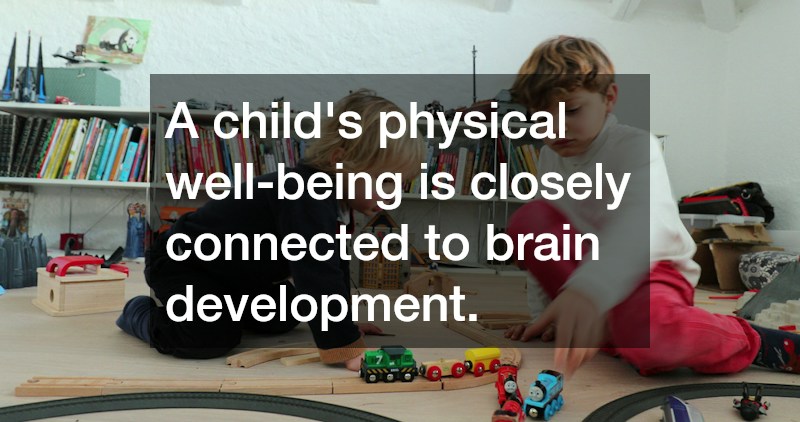
A child’s physical well-being is closely connected to brain development. Proper nutrition provides the building blocks the brain needs to grow, with nutrients such as iron, protein, and healthy fats playing key roles in early development. Adequate sleep is equally important. During sleep, the brain processes new information, consolidates memories, and supports emotional regulation. Children who get enough rest tend to have better attention, mood, and learning outcomes. Regular health checkups also help track developmental milestones and identify potential concerns early. When challenges are caught early, interventions tend to be more effective, which is why routine pediatric care is an important part of supporting a child’s overall growth.
Building a Strong Foundation for the Future
The science is clear that early experiences shape the brain in powerful and lasting ways. Responsive relationships, rich language exposure, plenty of play, healthy routines, and protection from chronic stress all help create a strong foundation for learning and well-being. Parents and caregivers do not need expensive programs or special tools to support healthy child development. Simple, consistent moments of connection, conversation, and encouragement can make a meaningful difference. By understanding how young brains grow, families and educators can help children build the skills, confidence, and resilience they need to thrive in school and throughout life.